The Spirituality of St. Guido Conforti, Founder of the Xaverian Missionaries
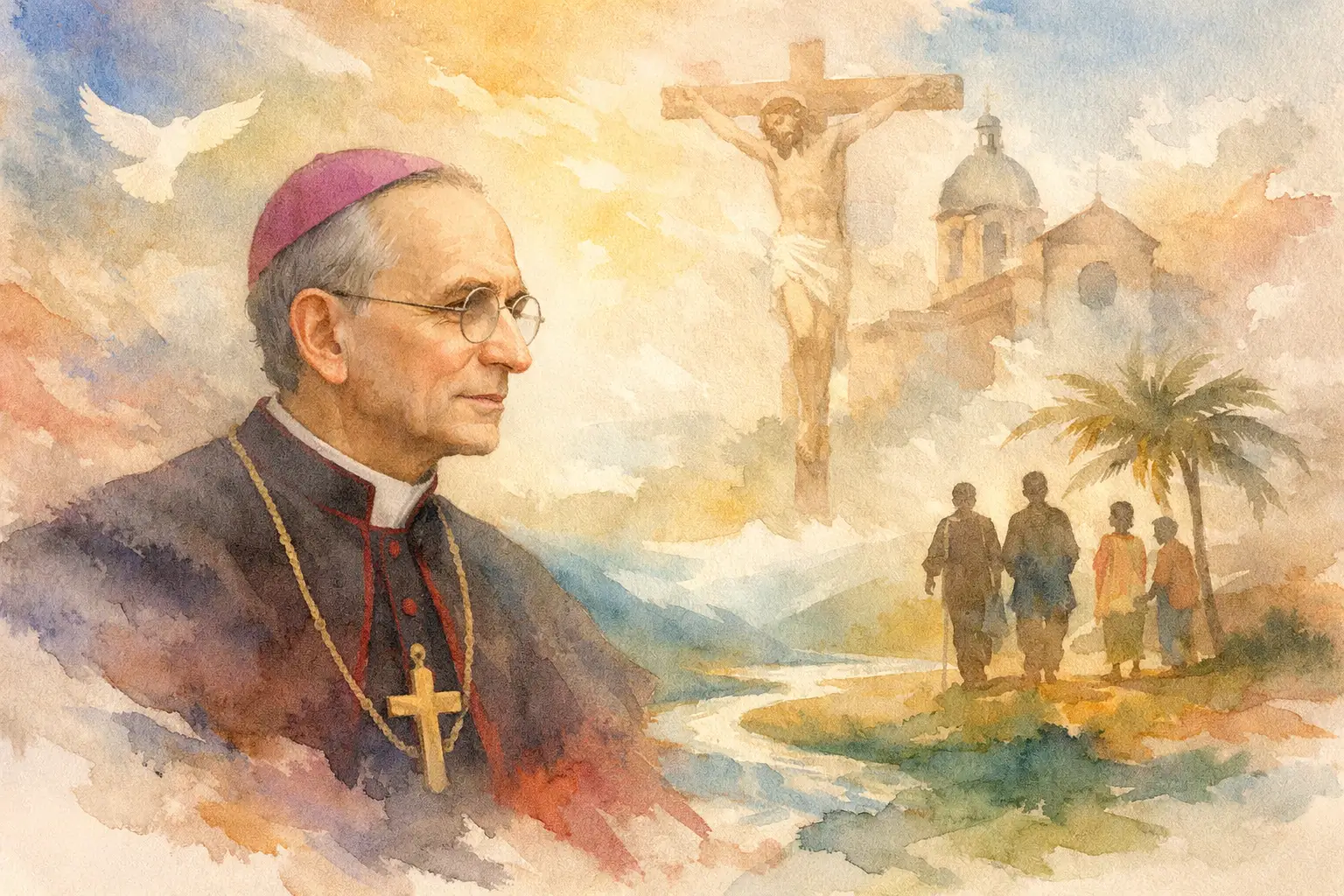
When faith begins to feel narrowed to private comfort or reduced to arguments, St Guido Maria Conforti spirituality offers a different path. It calls the Church back to Christ, back to mission, and back to a way of living that sees every person as worthy of reverence, encounter, and hope. For Catholics trying to hold together prayer, evangelization, justice, and dialogue in a divided world, that witness still speaks with unusual clarity.
Conforti did not imagine mission as a project of religious expansion alone. He saw it as a response to the love of Christ, a love so compelling that it could not remain closed in on itself. His spirituality grew from contemplation of the crucified Lord and moved outward toward the whole human family. That movement matters. It reminds us that missionary life is not activism with religious language added on top. It begins in adoration, trust, and conversion.
The heart of St Guido Maria Conforti spirituality
At its center, Conforti spirituality is profoundly Christological. He returned again and again to the person of Jesus, especially Christ crucified, as the model for every missionary disciple. To know Christ was not only to study his words, but to share his dispositions – obedience to the Father, compassion for the suffering, humility in service, and total self-gift for the life of the world.
That gives this spirituality both depth and simplicity. It is not built on complicated methods. It asks a harder thing: to become conformed to Christ so thoroughly that one can say, in daily life and not only in prayer, that Christ is the center. For parish leaders, catechists, parents, and those discerning vocation, this can be both consoling and demanding. It brings clarity, but it also leaves little room for self-importance.
Conforti also believed that mission belongs to the whole Church. While he founded a missionary congregation, his spiritual vision was never meant for priests and religious alone. Any baptized person can live with a missionary heart. That may happen across continents, but it also happens in classrooms, neighborhoods, hospitals, prisons, and interfaith gatherings where the Gospel is carried by presence, patience, and truthfulness.
A spirituality shaped by the cross and the Gospel
One of the clearest marks of St Guido Maria Conforti spirituality is its closeness to the cross. Not suffering for its own sake, and not a harsh spirituality that ignores human limits, but a willingness to remain faithful when the path is costly. Conforti himself knew weakness, disappointment, and physical suffering. He did not build a spirituality for ideal conditions. He built one for real discipleship.
That makes his witness especially meaningful now. Many Catholics want to serve generously, but they are tired. Some feel discouraged by division in the Church or by the scale of human need in the world. Conforti does not answer that weariness with slogans. He points back to the crucified Christ, where love remains steadfast and fruitful even when results are not immediate.
This is where his spirituality avoids two common distortions. On one side, mission can become mere efficiency, measured only by visible outcomes. On the other, faith can become inward and detached from the needs of the world. Conforti holds contemplation and apostolic charity together. Prayer without mission becomes closed. Mission without prayer becomes thin.
Mission as witness, not conquest
For many readers today, the word mission can carry tension. Some hear generosity and Gospel service. Others hear memories of domination, cultural erasure, or religious triumphalism. Any serious presentation of missionary spirituality has to face that honestly.
Conforti helps here because his spiritual emphasis is not conquest, but witness. He wanted missionaries to be formed deeply enough in Christ that their lives themselves would speak. That does not remove the importance of proclamation. Catholics are called to share the Gospel. But the manner matters. Humility matters. Respect matters. Listening matters.
This is one reason his spirituality remains relevant in a religiously diverse society. To witness to Christ faithfully does not require contempt for others. In fact, authentic missionary discipleship makes genuine encounter more possible, not less. A person secure in Christ does not need to fear dialogue. They can listen with reverence, speak with conviction, and meet others without surrendering their identity.
That balance is not always easy. Some Catholics worry that dialogue weakens evangelization. Others worry that evangelization prevents real dialogue. Conforti spirituality suggests that both fears can be answered by holiness. When Christ is truly at the center, dialogue does not become relativism, and proclamation does not become aggression.
Humility, unity, and the making of one family
Conforti carried a deep concern for unity. Mission, in his vision, was ordered toward gathering, healing, and reconciliation. The Gospel is not announced to create camps of the righteous. It is announced so that all may discover their dignity as children of God and so that the human family may be drawn toward communion.
That is why humility is so central to his spirituality. The missionary is not the hero of the story. Christ is. The people being served are not objects of charity. They are neighbors, teachers, and fellow pilgrims in God’s providence. This attitude changes everything. It changes how one enters another culture, how one speaks about poverty, how one participates in parish ministry, and how one responds to people who believe differently.
Humility also protects mission from becoming self-referential. Communities can sometimes become attached to their own programs, language, or preferred ways of doing things. Conforti’s witness asks a more searching question: are we helping people encounter Christ, or are we mostly preserving ourselves? That question is healthy for missionary congregations, but it is just as healthy for parishes, schools, and Catholic organizations.
How this spirituality can be lived today
St Guido Maria Conforti spirituality is not reserved for a feast day reflection or for those entering religious life. It can shape ordinary Catholic living in practical ways. It begins with prayer that keeps Christ at the center, especially prayer before the cross and the Gospel. It grows through a willingness to be sent – perhaps overseas, perhaps across town, perhaps into a difficult conversation that requires patience and mercy.
It also asks us to form habits of encounter. For some, that means serving migrants, accompanying people on the margins, or supporting global missionary work. For others, it means learning how to meet neighbors of other faiths without suspicion. In many communities, it may mean reconnecting with Catholics who feel alienated from the Church and listening before offering answers.
There is no single way to live this spirituality, and that is part of its strength. A young adult discerning religious vocation, a teacher in Catholic education, and a retiree involved in parish outreach may all embody it differently. The common thread is a life shaped by Christ, offered for mission, and marked by humility.
The Xaverian Missionaries continue to draw from this charism in a way that joins evangelization with intercultural encounter and interfaith dialogue. That expression feels especially urgent in the United States, where many Catholics are searching for a missionary identity that is faithful, openhearted, and credible.
What Conforti offers a divided age
Our moment rewards quick judgments, public certainty, and constant reaction. Conforti offers another way. He points to a spirituality patient enough to listen, strong enough to witness, and rooted enough to endure suffering without bitterness. That combination is rare.
He also reminds us that mission is larger than strategy. Plans matter, institutions matter, and formation matters. But the deepest question is whether we are becoming the kind of disciples who make Christ visible. Without that, even good ministry can become noisy. With it, even hidden acts of fidelity can bear lasting fruit.
For Catholics concerned about the future of the Church, this is not a small insight. Renewal does not come only from better messaging or stronger structures, though both have their place. It comes from saints, from communities formed by the Gospel, and from believers who can cross borders of culture, pain, and misunderstanding with reverence.
St Guido Maria Conforti spirituality remains compelling because it is both demanding and hopeful. It asks for conversion, not image management. It asks for communion, not control. And it invites us to believe that if we stay close to Christ, we can help make the world a little more like the family God intends it to be.