Catholic Interfaith Dialogue and Why it Matters
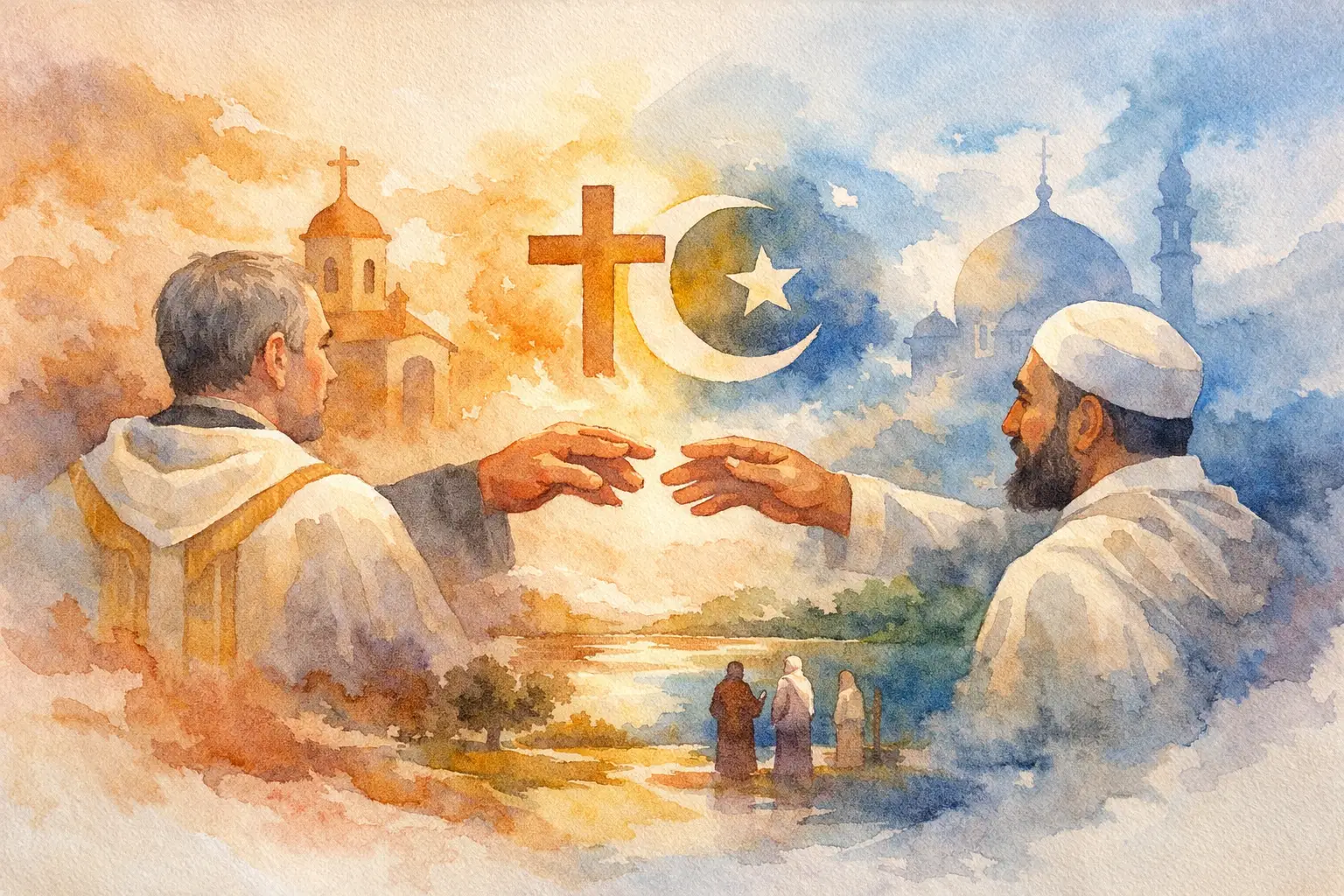
A parish opens its hall after a mosque experiences vandalism. A Catholic school invites a Jewish speaker to teach about Sabbath and anti-Semitism. A missionary sits with a Buddhist monk, not to win an argument, but to understand how a neighbor prays, suffers, and hopes. These Catholic interfaith dialogue examples are not side projects. They are part of how the Church lives its mission in a religiously diverse world.
For many Catholics, interfaith dialogue can sound abstract – something handled by bishops, scholars, or formal conferences. But in practice it often happens in ordinary places: classrooms, hospitals, neighborhood meetings, shared meals, vigils after tragedy, and long friendships that grow over time. The point is not to water down Catholic faith. The point is to meet others with clarity, charity, and genuine openness, trusting that truth is never threatened by honest encounter.
What Catholic interfaith dialogue looks like in real life
The Church uses the word dialogue in a broad and practical sense. It includes theological conversation, but it also includes everyday relationships, shared concern for the poor, and moments of spiritual exchange. A Catholic who listens respectfully to a Hindu coworker during Diwali, asks thoughtful questions, and shares the meaning of Advent when invited is already participating in a form of dialogue.
That matters because interfaith relationships are rarely built through a single event. They are formed through consistency. Trust grows when Catholics show up with humility, know their own faith, and resist the temptation to reduce another religion to a headline, stereotype, or debate point.
Catholic interfaith dialogue examples in local communities
One common example is the shared response to grief or violence. After an act of hatred aimed at a synagogue, mosque, temple, or church, Catholic leaders and parishioners may attend a vigil, offer public solidarity, or provide practical support. This is not only civic courtesy. It is a witness to the dignity of every person and a refusal to let fear define the neighborhood.
Another example is ongoing clergy and lay conversation. In many towns, priests, pastors, rabbis, imams, and other religious leaders meet regularly to discuss community concerns such as homelessness, youth mental health, immigration, or public safety. These gatherings may not produce dramatic headlines, but they build the kind of trust that becomes essential during moments of crisis.
Educational settings also offer strong examples. A Catholic school may host an interfaith panel where students hear from Jewish, Muslim, Buddhist, and Christian speakers about prayer, fasting, holy days, and family life. Done well, this kind of program does not present all religions as interchangeable. Instead, it teaches students how to listen carefully, ask respectful questions, and recognize both common moral concerns and real differences.
Service is another important form of dialogue. Catholics and members of other faith communities often work together at food pantries, refugee support programs, prison ministries, or disaster relief efforts. Shared service can deepen mutual respect because people encounter one another not as abstract representatives of a tradition, but as co-workers responding to human need.
Examples from Catholic mission and global witness
Missionary life offers some of the clearest Catholic interfaith dialogue examples because missionaries often live as a small Christian presence among people of many faiths. In parts of Asia, Africa, and the Middle East, Catholic missionaries may spend years building friendships with Muslim, Hindu, Buddhist, or traditional religious communities. These relationships can include participation in civic celebrations, visits during major religious feasts, and cooperation in schools or health clinics.
In these settings, dialogue is often tied closely to daily survival and peacebuilding. If families of different religions share the same village, water source, or marketplace, mutual respect is not optional. A missionary who listens well and acts justly can help reduce suspicion and create space for real friendship.
At the same time, this work requires patience. Not every setting is equally open. In some places, public theological discussion is welcome. In others, the wiser path is quiet witness through service, presence, and moral integrity. Dialogue is not a script. It depends on history, local tensions, political realities, and the level of trust that already exists.
The Xaverian Missionaries have long emphasized this kind of encounter-centered mission. Their approach reflects a deeply Catholic conviction that evangelization and dialogue are not enemies. When carried out faithfully, each can purify and strengthen the other.
Four forms of dialogue Catholics can recognize
Catholic teaching often describes interreligious dialogue through several forms. The dialogue of life happens when neighbors share ordinary daily experience with respect and friendship. The dialogue of action happens when people of different faiths work together for justice, peace, and the care of the vulnerable. The dialogue of theological exchange involves scholars or religious leaders who discuss beliefs with seriousness and precision. The dialogue of religious experience happens when people share, in appropriate ways, how they pray, fast, seek God, or practice contemplation.
Most Catholics will not spend their time in formal theological exchange. But many can take part in the dialogue of life and action. Parents do this when they befriend families of another religion. Parish volunteers do it when they partner with other congregations on local needs. Young adults do it when they learn how to speak about Jesus with conviction and respect among friends who believe differently.
What interfaith dialogue is not
Some Catholics worry that dialogue means pretending doctrinal differences do not matter. That concern deserves an honest answer. Authentic dialogue does not ask Catholics to set aside belief in Christ, the sacraments, or the Church’s mission. It asks for something more demanding: a faith mature enough to listen without fear and speak without hostility.
Dialogue is also not the same as syncretism. It does not mean blending religions into a vague spirituality with no clear center. A Catholic can admire a Muslim’s discipline in prayer, a Jewish community’s devotion to remembrance, or a Buddhist commitment to contemplation without denying the distinct claims of the Gospel.
There is also a practical caution here. Not every interfaith event is automatically fruitful. If an event is poorly prepared, politically charged, or designed only for appearances, it may create confusion rather than understanding. Good dialogue needs clear purpose, knowledgeable participants, and mutual respect.
How parishes and Catholics can begin well
The strongest starting point is often local and relational. A parish might begin by meeting leaders from a nearby synagogue, mosque, or temple, not to launch a major program right away, but to listen. What concerns shape the neighborhood? Where are families struggling? What misconceptions or fears already exist? These questions usually matter more than planning a symbolic photo opportunity.
Formation within the parish is equally important. Catholics need enough grounding in their own faith to enter dialogue with confidence. That means Scripture, Catholic social teaching, the Church’s understanding of other religions, and a habit of prayer. Without formation, dialogue can become shallow. With formation, it becomes a credible act of witness.
It also helps to keep the first steps concrete. A shared meal, a visit to another community’s open house, cooperation on winter clothing drives, or a public conversation about caring for immigrants can create a strong foundation. Over time, those practical encounters may open the door to deeper spiritual and theological conversation.
Why these examples matter now
In the United States, many Catholics live and work alongside people of different religions every day. Children grow up in mixed neighborhoods. Hospitals serve families from every background. Schools and workplaces bring together people whose beliefs shape everything from daily prayer to dietary practice to moral decision-making. If Catholics are not prepared for respectful encounter, fear and caricature quickly fill the gap.
Interfaith dialogue also matters because public life is often marked by suspicion. Religious communities can either mirror that suspicion or become places where a different way of relating is possible. When Catholics practice dialogue rooted in truth and charity, they help build a culture where disagreement does not become contempt.
That witness is especially important for younger generations. Many young adults are skeptical of religious institutions, yet they are often deeply concerned about peace, justice, and human dignity. When they see Catholics engaging other faiths with conviction and compassion, they glimpse a Church that is not withdrawing from the world, but entering it with hope.
The most persuasive examples are rarely flashy. They are found in patient friendship, shared sorrow, acts of service, and conversations that continue after the official program ends. A Catholic who learns a neighbor’s holy day, stands beside them in grief, and speaks openly about Christ without pressure or contempt is already doing something deeply missionary.
That kind of encounter does not solve every tension. It does something more human and, often, more lasting. It teaches us how to recognize one another as neighbors before we speak as opponents, and how to let faith become a bridge of presence, reverence, and peace.