Lourdes and Fatima Pilgrimage: What to Expect
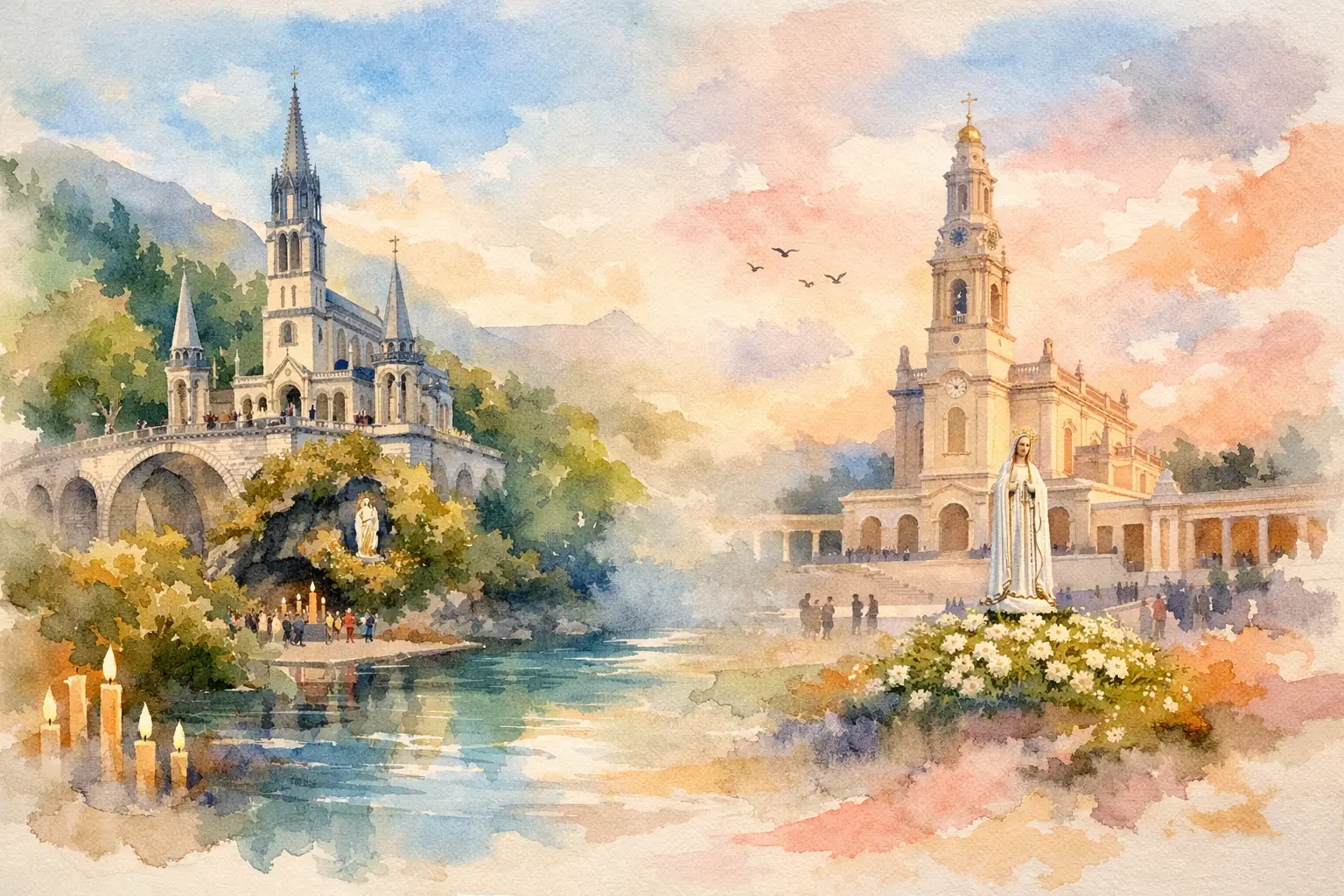
A Lourdes and Fatima pilgrimage is not simply a trip with holy sites on the itinerary. It is a journey shaped by prayer, healing, repentance, and hope – and for many pilgrims, it becomes a quiet turning point in how they understand God’s presence in their lives.
People are often drawn to Lourdes and Fatima for different reasons. Some come carrying grief or illness. Some are praying for a loved one. Others arrive with gratitude, curiosity, or a desire to reconnect with the Church after years of distance. What these two places share is not only their connection to Marian apparitions, but their invitation to deeper conversion. They ask pilgrims to slow down, listen, and allow grace to meet them honestly.
Why a Lourdes and Fatima pilgrimage speaks to so many Catholics
Lourdes, in southern France, is known above all as a place of healing. In 1858, the Virgin Mary appeared to St. Bernadette Soubirous, a poor young girl whose humility remains central to the message of the shrine. The spring associated with those apparitions has become a sign of God’s mercy for millions who come seeking physical, emotional, or spiritual healing.
Fatima, in Portugal, has a different emphasis, though it is no less compassionate. In 1917, Mary appeared to three shepherd children and called the world to prayer, repentance, and peace. The Fatima message carries a sense of urgency, but not fear. It is a mother’s appeal to turn back to God, to pray the rosary, and to entrust the world to divine mercy.
Taken together, these shrines form a powerful spiritual path. Lourdes meets the human longing to be healed. Fatima meets the human need to be converted and sent forth in peace. A pilgrimage that includes both can feel especially meaningful for people who want not only consolation, but renewal.
Lourdes and Fatima pilgrimage: similarities and differences
Both shrines are unmistakably Marian, and both have become places where ordinary believers gather with profound trust. You will find candlelight processions, the rosary, Eucharistic celebrations, confessions, and pilgrims from every continent. There is also a shared witness of simplicity. In both Lourdes and Fatima, Mary appeared not to the powerful, but to children.
Still, the tone of each place is distinct. Lourdes often feels intimate and tender. Pilgrims pray at the Grotto, walk with the sick, and reflect on the vulnerability of Bernadette’s life. There is a strong sense that suffering is not hidden from God.
Fatima often feels wider in scope. The great plaza, the public processions, and the call to pray for the world remind pilgrims that faith is never purely private. The message reaches beyond personal intention to include nations, conflict, sin, and the need for peace. If Lourdes draws the heart inward, Fatima often sends it outward.
That difference matters. Some pilgrims are moved more deeply by one shrine than the other. It depends on where they are spiritually and what they are carrying. A person facing illness may feel an immediate bond with Lourdes. Someone burdened by anxiety about the world may find Fatima’s call to prayer and peace especially piercing. Most people, though, discover that each shrine interprets the other.
What pilgrims often experience at Lourdes
At Lourdes, the rhythm of prayer shapes the day. The Grotto is the spiritual center, and many pilgrims return there more than once because it invites a kind of stillness that cannot be rushed. The candlelight procession in the evening often becomes one of the most memorable moments of the journey. Thousands pray together, yet the atmosphere remains personal and prayerful.
Many pilgrims also take part in the baths or water gesture associated with the spring. For some, this is a deeply moving act of trust. For others, it may feel unfamiliar or emotionally difficult. There is no single right response. The point is not to force a dramatic spiritual experience, but to approach with humility and openness.
Lourdes is also a place where the presence of the sick is not pushed to the margins. That witness can be transformative. In a culture that often avoids weakness, Lourdes places frailty in the center of communal prayer. Pilgrims often leave with a changed understanding of dignity, compassion, and the meaning of Christian accompaniment.
What pilgrims often experience at Fatima
Fatima invites prayer with a wider horizon. The rosary is central, as is meditation on conversion and peace. Many pilgrims are struck by the way Fatima joins personal repentance with intercession for the whole world. It is a shrine that makes the global dimension of Catholic faith visible.
The Chapel of the Apparitions and the great basilica spaces create room for both quiet prayer and communal devotion. Processions at Fatima can feel solemn in a different way than Lourdes. There is often a stronger emphasis on reparation, sacrifice, and the serious consequences of turning away from God. Yet the heart of the message remains hope. Mary’s appeal is demanding because love is demanding.
For U.S. Catholics especially, Fatima can offer a useful correction to the idea that faith is mostly about private comfort. Pilgrims are reminded that prayer has social meaning. To pray for peace is to open oneself to becoming a peacemaker. To pray for conversion is also to examine one’s habits, relationships, and responsibilities.
How to prepare spiritually for a Lourdes and Fatima pilgrimage
Practical planning matters, but spiritual preparation matters more. A pilgrimage bears more fruit when it begins before the plane takes off. It helps to arrive with a prayer intention, but also with some freedom. Sometimes the grace of pilgrimage is not the answer we expected, but the grace to ask a better question.
Reading the stories of St. Bernadette and the Fatima children can ground the journey in the lives of real people rather than vague religious sentiment. Praying the rosary regularly before departure can also help. So can making time for the sacrament of reconciliation. Pilgrimage is not about spiritual performance. It is about availability.
It is wise to prepare emotionally as well. Not every holy place produces instant clarity or comfort. Some pilgrims feel consoled right away. Others feel tired, distracted, or even disappointed at first. That does not mean the pilgrimage is failing. Grace often works beneath the surface, quietly and over time.
Going as a group, not just as an individual
One of the gifts of pilgrimage is that it is rarely a solitary act, even when your intentions are deeply personal. You travel with the prayers of your parish, your family, and the wider Church. You also encounter fellow pilgrims whose stories may widen your own heart.
This is where a mission-centered approach can deepen the experience. When pilgrimage is understood as encounter, not religious consumption, people begin to notice more. They listen more carefully. They recognize the Church’s global face in the accents, languages, and life stories around them. For communities such as the Xaverian Missionaries, that kind of encounter is central to Christian witness. We do not come only to receive blessings for ourselves. We also learn to see others as companions in grace.
That communal dimension is especially strong at Marian shrines. Mary gathers people. She does not erase differences, but she holds them within a larger family of faith. In places like Lourdes and Fatima, pilgrims experience the Church as both local and universal – rooted in devotion, yet open to the suffering and hopes of the whole world.
What changes after you come home
The most meaningful sign of a fruitful pilgrimage is usually not what happened abroad, but what begins afterward. A person may return with a renewed commitment to daily prayer, a deeper love for the rosary, or a more regular sacramental life. Someone else may come home with a stronger desire to serve the sick, work for peace, or repair a damaged relationship.
That is the real test of a Lourdes and Fatima pilgrimage. Did it make your heart more available to God and more attentive to others? Did it deepen trust? Did it widen compassion? These are quiet questions, but they matter.
If you are considering this pilgrimage, you do not need to arrive with perfect faith. You only need a willing heart. Lourdes and Fatima both teach the same lesson in different ways: God often meets us through humility, prayer, and the courage to say yes. Go ready to listen, and let the journey keep working on you long after you return home.