How to Discern Religious Missionary Vocation
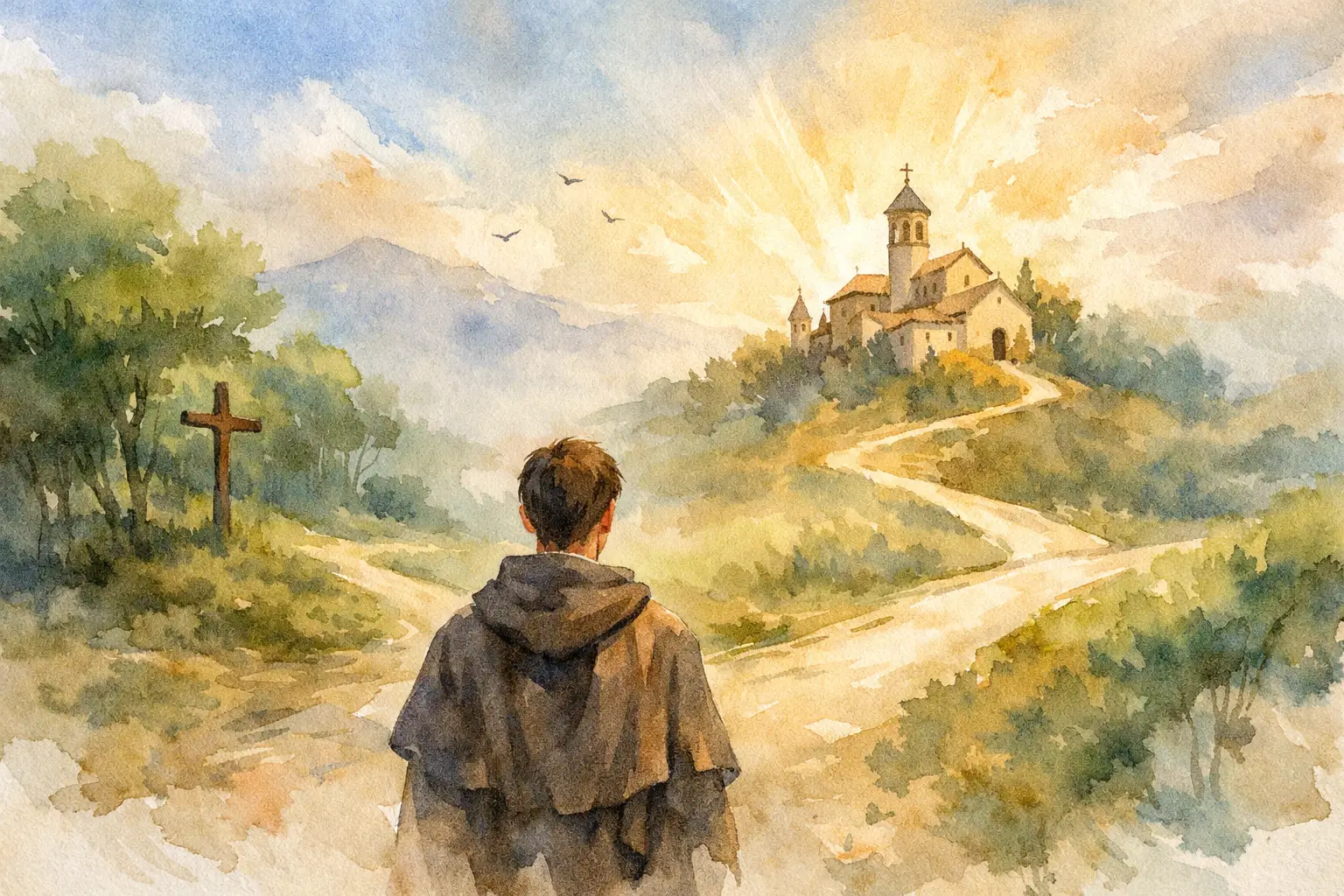
Some questions do not go away quietly. They return during prayer, in moments of service, in the ache to give your life more fully to God, and sometimes in a surprising sense of peace when you imagine a different future. If you are asking how to discern religious vocation, you are already standing on holy ground. Discernment is not about passing a test or forcing a decision. It is about learning to recognize where Christ is calling you and how your life can become a gift for the Church and the world.
For many Catholics, religious vocation can feel both beautiful and intimidating. The idea may stir generosity, but also fear. What if I misread God’s will? What if I am not holy enough, brave enough, or clear enough? Those questions are common. A vocation is not usually revealed all at once. More often, it becomes clearer through prayer, honest self-knowledge, companionship, and a growing desire to belong completely to God.
What religious vocation really means
In the broad sense, every baptized person has a vocation, because every Christian is called to holiness and mission. But when people ask about a religious vocation, they usually mean a call to consecrated life in a religious community as a brother, sister, or priest shaped by vows, common life, prayer, and service.
This matters because discernment is not simply about choosing meaningful work. It is about asking whether God is inviting you into a particular way of loving. Religious life is not an escape from the world. At its best, it is a deeper way of entering the needs of the world with Christ’s heart. It joins prayer and service, contemplation and witness, community and mission.
For some, that call takes shape in teaching, pastoral ministry, healthcare, or life in a monastery. For others, it includes missionary witness across cultures, solidarity with the poor, and respectful encounter with people of other faiths. The form varies. The center does not. The center is a life given to God for the sake of the Kingdom.
How to discern religious vocation in a Catholic way
Catholic discernment is not driven by impulse alone. It asks you to pay attention to grace. What draws you closer to Christ? What deepens your love for the Church? What increases humility, freedom, generosity, and peace, even when the path is demanding?
That last point is important. Peace does not always mean ease. Sometimes a real vocation brings struggle because it stretches the heart. But beneath that struggle there is often a steady current, a sense that this path is true, that it leads toward love rather than self-protection.
Discernment also asks for honesty. You do not need to be perfect to begin. But you do need to be willing to tell the truth about your motives, your wounds, your hopes, and your fears. Some people are drawn to religious life because they genuinely desire to belong to God and serve others. Others may be reacting against loneliness, uncertainty, or disappointment. Usually it is mixed. That is why discernment takes time.
Start with prayer that listens
If you want to know God’s call, make room to hear it. Set aside regular time for silent prayer with Scripture. Bring your questions to Jesus directly. Ask not only, “What do you want me to do?” but also, “Who are you inviting me to become?”
The Gospels are especially important here. Watch how Jesus calls people. He is clear, but never coercive. He invites. He asks for trust. He draws people into communion and sends them outward in service. Over time, prayer can reveal whether your attraction to religious life is fleeting or whether it continues to deepen.
The sacraments matter too. Frequent Eucharist and regular confession help form the inner freedom that discernment requires. Without that foundation, it is easy to confuse strong emotion with God’s voice.
Notice the signs, but do not force them
People often want a dramatic sign, yet vocation usually grows through ordinary faithfulness. You may notice that prayer becomes more alive when you imagine living in community. You may feel drawn to a life of simplicity, obedience, and mission. You may discover joy in serving people on the margins or in sharing the Gospel across lines of culture and difference.
At the same time, attraction alone is not enough. Some people admire religious life without being called to it. Others resist it at first and only gradually recognize it as their path. This is one reason discernment should be patient. A quick answer can feel satisfying, but it may not be deep.
Questions that can clarify a possible call
A few questions can help bring your discernment into focus. When I imagine marriage and family life, do I feel peace, or does something remain unsettled? When I imagine a life of vows, prayer, community, and service, do I sense fear alone, or fear mixed with real desire? Am I drawn to belonging to a particular community, charism, or mission? Do I want to offer my life for others in a way that is stable and public within the Church?
It also helps to ask how you relate to mission. A religious vocation is not centered on self-fulfillment, even though it can bring deep joy. It is about availability. Can you imagine your life being sent where there is need? Can you imagine loving people whose language, culture, or experience differs greatly from your own? A missionary heart is often marked by this widening love.
These questions do not solve everything, but they can reveal where grace is already at work.
Why community is part of the answer
You cannot discern religious life in isolation because religious life itself is not lived in isolation. Community is not an optional extra. It is part of the vocation. That means discernment should include contact with real religious communities, not an idealized image of them.
Visit if you can. Pray with the community. Speak with members honestly. Ask about their daily life, their apostolate, their common prayer, and their struggles. Every community has its own charism, culture, and rhythm. Some emphasize contemplation, some education, some parish ministry, some mission ad gentes. The question is not which one seems most impressive. The question is where your gifts and desires meet the form of life God may be offering you.
This is also where a missionary community can be especially compelling for those who feel called beyond familiar boundaries. The Xaverian Missionaries, for example, understand mission as witness, encounter, and the patient work of making the world one family in Christ. For some discerners, that combination of Catholic identity, intercultural life, and dialogue with others opens something important in the heart.
Seek a wise spiritual guide
A vocation director or spiritual director can help you discern what you may not see clearly on your own. This is not about handing your decision to someone else. It is about receiving accompaniment from someone who knows how the spiritual life unfolds.
A good guide will not rush you. They will notice patterns, ask difficult but compassionate questions, and help you distinguish between grace and anxiety, genuine calling and passing intensity. They may also help you see practical considerations, such as emotional maturity, prayer habits, relationships, and readiness for community life.
What can get in the way
Fear is one obstacle, but not the only one. Sometimes the greater obstacle is noise. Constant distraction can make discernment almost impossible. If your life is crowded with activity, media, and endless comparison, you may never stay still long enough to hear the deeper movements of the heart.
Another obstacle is the expectation of total certainty. Most major vocations involve trust before certainty. You are not expected to know the whole road in advance. You are asked to take the next honest step.
Family concerns can also weigh heavily. Some loved ones will understand your discernment right away. Others may not. Their questions deserve respect, but they cannot make the decision for you. Part of discernment is learning to listen lovingly without surrendering the freedom God gives.
When to take the next step
If your attraction to religious life has remained steady over time, if prayer keeps bringing you back to it, and if wise people recognize signs of a possible call, it may be time to move from wondering to exploring. That does not mean making final vows tomorrow. It means accepting that discernment matures through concrete response.
Reach out. Visit. Ask candid questions. Let the life become more real. God often clarifies a vocation through experience, not just reflection.
There may still be uncertainty, and that is all right. Discernment is less about achieving perfect clarity than growing in honest availability to God. If Christ is calling you, he is not trying to trap you. He is leading you toward a life that will ask much of you, but also make your heart more generous, more free, and more alive in love.
Stay close to prayer. Stay close to the sacraments. Stay close to people who know how to listen. A vocation is never just about where you will live or what work you will do. It is about the shape your yes will take when God asks for your whole life.