Why “Doing Nothing” is the Secret to Service
(and 4 Other Counter-Intuitive Lessons from the Global Mission)
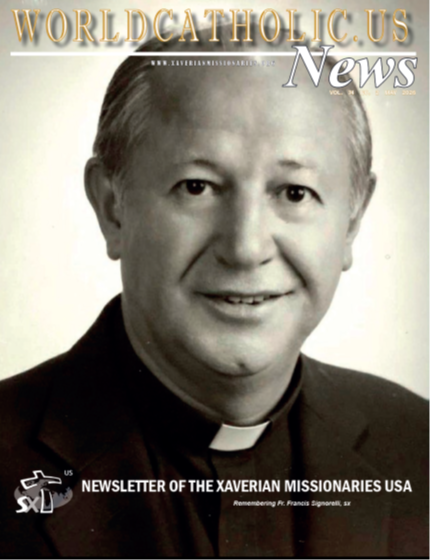
The following is a reflection on the last issue of our print newsletter, WorldCatholic.US. for May 2026.
1. Introduction: The Search for Connection in a Fractured World
Picture a table in a quiet room in Metrowest, Massachusetts. Around it sit a Rabbi, an Imam, a Catholic priest, and a former preschool teacher. They are not there to debate the finer points of dogma or to convert one another. They are there because they recognize a fragile truth: in a world where headlines thrive on religious division, the simple act of listening has become a radical necessity. We often feel an urgent, almost frantic pressure to “do something” to mend the fractures of our time. However, the recent experiences of the Xaverian Missionaries—from the sun-drenched medical clinics of El Salvador to the high-stakes land disputes of the Amazon—suggest that the most impactful lessons in human connection are often the most counter-intuitive.
2. Lesson 1: The Most Important Work is Often “Doing Nothing”
During a recent medical mission to El Salvador with Helping Hands Medical Mission, Fr. Alex Rodriguez, sx, encountered a question that stopped him in his tracks. People wanted to know what he actually did on the trip, measuring his value in tasks completed or hours logged. His answer was startling: “nothing.” While doctors and nurses moved tirelessly through lines of people stretching under the hot sun with quiet hope, Fr. Alex realized his role was to ensure the mission didn’t reduce something sacred into something merely functional.
Doing “nothing” was, in fact, the difficult work of total presence. It was the stubborn decision to stay when a mother began to cry—not from physical pain, but from the sheer exhaustion of carrying her burdens alone. It meant anointing trembling hands in the middle of uncertainty and listening to stories that had no neat endings. It was a service of the immeasurable.
A mission trip is not only about what is given—it is about what is revealed.
3. Lesson 2: Your Character Outweighs Your Rituals
In the Metrowest Interfaith Community planning session, the dialogue moved beyond the mechanics of religion—the fasting, the pilgrimages, and the prayers. An Imam in the group offered a profound reordering of priorities that challenged the room. He explained that in the Islamic tradition, the primary mandate is the “perfecting of human character.” Rituals are the framework, but honorable morals—kindness, integrity, and compassion—are the true metrics of faith.
This is a radical call to accountability that transcends “territorial complacency.” It suggests that a person’s religious performance is hollow if it is not “decorated” by moral conduct. It provides a universal starting point for cooperation: we are defined not by the rites we perform, but by the people we choose to be in our interactions with others.
If there is any Muslim who prays… who fasts… who performs the pilgrimage… But his character and his moral conduct is not decorated. We disassociate ourselves from them.
4. Lesson 3: To Strengthen Your Own Faith, Move Toward Others
There is a common, quiet fear that engaging deeply with other traditions will dilute one’s own identity. Fr. Carl Chudy, sx, found the exact opposite to be true. He discovered that interreligious solidarity didn’t make him “less” of anything; it made him a better Catholic priest. He argues that stepping outside one’s own echo chamber “compels us to ask questions no one else can pose,” forcing a person to look deeper into the roots of their own tradition.
By seeing the divine reflected in the eyes of “the other,” faith is transformed from an exclusive, guarded territory into an expansive source of connection. Moving toward others doesn’t weaken the foundation; it provides a more robust, sophisticated understanding of one’s own intimate connection to the rest of humanity.
5. Lesson 4: Solidarity is a Moral Superpower, Not a Political Strategy
Interfaith work is often mistaken for polite conversation, but at its heart, it is an act of moral courage. This was illustrated by a Rabbi’s reflection on the Egyptian midwives, Shiphrah and Puah. Though they were Egyptians, they defied their own king’s decree to save the children of the Israelites.
They chose to be “traitors” to their tribe’s worst instincts in order to serve a higher moral standard. Their solidarity was not a calculated political move, but a refusal to be fooled by a ruler who sought power through division. They proved that true service requires the grit to stand with your neighbor, even when it means standing against your own “side.”
6. Lesson 5: Faith is the Ability to See God in Conflict
We often imagine faith as the quiet peace found at an altar, but the life of Fr. Francis Signorelli, sx, shows it is a tool for navigating the heat of social justice. While serving in the Amazon, Fr. Francis faced direct threats from a powerful landowner who had illegally evicted poor peasants. The conflict came to a head when the landowner attempted to become a Godfather.
Fr. Francis refused, unwilling to allow the man to use a sacred rite to mask his exploitation of the poor. He reported the threats to the Bishop, who eventually involved State Authorities to have the man’s visa denied. This was Fr. Francis’s “spirit of living faith”—not an escape from the world’s problems, but a mandate to seek and love God in the middle of high-stakes, dangerous conflict.
spirit of living faith, that would help me to find God, look for God and love God in all things.
7. Conclusion: The Power of the Single Bridge
These five lessons form an interconnected path for mending a fractured world. By dismantling misinformation through a childlike curiosity and prioritizing shared character over divisive rituals, we find the common ground necessary for true solidarity. This journey doesn’t just help others; it strengthens our own convictions and reminds us that we belong to a much larger, albeit fragile, family.
Service is not a one-way street of giving; it is an encounter where both parties discover they are bound together by something quietly sacred.
In a world that often encourages us to build walls, what is one small bridge you can build this week?