Why Do Catholics Do Missionary Work?
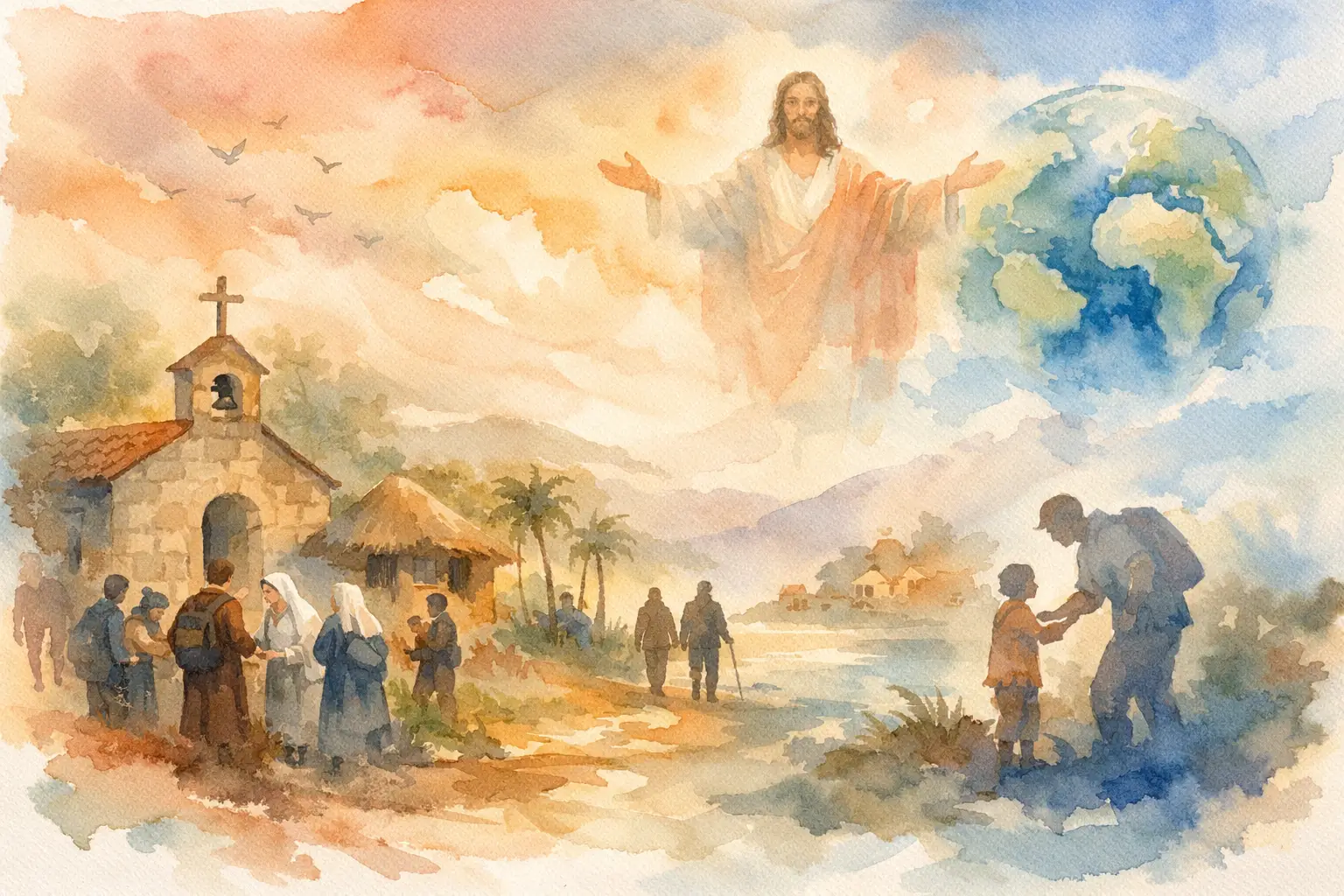
A parish sends a group to serve at a shelter. A sister spends decades teaching in East Africa. A lay Catholic joins an interfaith conversation in her own town. A priest visits families, listens to their struggles, and prays with them. These moments may look very different, but they all raise the same question: why do Catholics do missionary work?
The short answer is that mission belongs to the heart of the Gospel. Catholics do missionary work because Jesus sends his followers outward – not to dominate, not to erase cultures, and not to win arguments, but to bear witness to God’s love in word and action. Mission is about proclaiming Christ, serving human dignity, building relationships, and discovering that God is already at work in the people and places we encounter.
Why do Catholics do missionary work in the first place?
Catholic missionary work begins with God’s own movement toward the world. In Christian faith, God does not remain distant. God comes near, speaks, accompanies, heals, and gathers. The Church continues that movement. That is why mission is not an optional side project for especially adventurous believers. It is part of what the Church is.
Jesus tells his disciples to go out to all nations, preach the Gospel, care for the sick, and make disciples. Catholics have always understood those words as both spiritual and practical. The Gospel is meant to be shared, but never reduced to speech alone. If we announce the love of Christ while ignoring hunger, violence, loneliness, or injustice, our witness becomes thin. If we serve material needs while hiding the source of our hope, we also fall short of the fullness of mission.
So Catholic mission holds these realities together. It proclaims. It serves. It listens. It accompanies. It invites. It also learns. Mission is not a one-way transaction from the strong to the weak. At its best, it is a relationship in which all are called deeper into truth, conversion, and communion.
Mission is more than proselytism
One reason people ask why Catholics do missionary work is that the word mission can sound aggressive or outdated. Some hear it and imagine pressure, cultural superiority, or a numbers game. The Church has had to reckon honestly with moments in history when missionary activity was too closely tied to colonial power or failed to respect the dignity of local peoples. That history matters.
But authentic Catholic mission is not coercion. It is not manipulation. It is not treating other religions or cultures as obstacles to be removed. The Church proposes faith; it does not impose it. Missionary work, rightly understood, begins with encounter.
That means Catholics enter other communities with reverence and humility. They come ready to share the Gospel, but also ready to listen. They recognize seeds of truth, goodness, and holiness in peoples and traditions beyond their own experience. In many places, mission includes interreligious dialogue, friendship across difference, and collaboration for peace and justice. This is not a weakening of Catholic identity. It is one expression of confidence that truth does not fear honest encounter.
Why do Catholics do missionary work among the poor and marginalized?
Because that is where Jesus places himself. Again and again in the Gospels, Christ draws near to people who are excluded, wounded, or forgotten. He announces good news to the poor not as a slogan, but as a lived reality.
For Catholics, missionary work includes solidarity with those who suffer from poverty, displacement, violence, and neglect. That can look like education, healthcare, pastoral accompaniment, advocacy, trauma support, or the patient work of strengthening local communities. It can happen overseas, but it also happens in neighborhoods, prisons, hospitals, campuses, and border regions closer to home.
Still, there is an important distinction here. The poor are not projects. Mission is not charity that keeps one group in control and another group dependent. Catholic teaching insists on the dignity and agency of every person. The goal is communion, not paternalism. The missionary does not arrive as the hero of the story. The missionary arrives as a disciple, ready to serve and be changed.
This is one reason many Catholic missionaries speak less today about bringing God to a place and more about recognizing how God is already present there. The task is not to replace a people’s humanity with our plan, but to walk with them in hope and help make visible the life God desires for all.
The Church is missionary by nature
Catholics do missionary work because baptism itself is missionary. Every baptized person shares, in some way, in the Church’s call to witness to Christ. Not everyone is called to move across borders or join a missionary society. But everyone is called to live outward-facing faith.
That may mean teaching the faith to children, accompanying someone back to the sacraments, supporting mission through prayer and giving, or building friendships across lines that usually divide people. It may mean speaking about Christ in a secular workplace with gentleness and clarity. It may also mean entering spaces of tension – cultural, racial, political, or religious – and choosing dialogue over fear.
This wider understanding matters because it prevents mission from becoming the responsibility of a few specialists. Priests, brothers, sisters, and lay missionaries have a distinctive role, but the whole Church is sent. A missionary parish is not one that simply funds work elsewhere. It is a community formed by hospitality, witness, and concern for the world beyond itself.
Mission includes dialogue, not just proclamation
In a religiously diverse society, Catholics often wonder how missionary work should look without disrespecting neighbors of other faiths. The answer is not silence, but a more mature understanding of witness.
Catholic mission includes proclamation of Jesus Christ because the Church believes the Gospel is for everyone. At the same time, it includes dialogue because every human person deserves respect, and because genuine encounter deepens peace. These are not opposing commitments.
Dialogue does not mean pretending differences do not matter. It means engaging those differences truthfully and charitably. A Catholic can remain firmly rooted in Christ while sitting at the table with Muslims, Jews, Hindus, Buddhists, or people with no religious affiliation, seeking mutual understanding and the common good. In many communities, this kind of mission is urgently needed. Fear grows quickly where relationships are absent.
Organizations such as the Xaverian Missionaries have long emphasized that missionary presence includes crossing boundaries with humility. That can happen in another country, but it can also happen in an American suburb where neighbors come from many traditions and carry different histories of faith.
Mission changes the missionary too
Another reason Catholics do missionary work is that mission is a path of conversion. People often assume missionaries are the ones who bring transformation to others. Often they do. But they are transformed as well.
When Catholics enter another culture with openness, they begin to see the limits of their own assumptions. They may discover forms of faith, resilience, family life, prayer, and community that challenge their individualism or comfort. They may come intending to teach and find themselves receiving profound wisdom.
This does not mean all cultural practices are equal or beyond critique. The Gospel still calls every culture, including Catholic culture, to purification and renewal. But mission becomes healthier when it is shaped by mutuality. The missionary offers Christ and the life of the Church, while also receiving the gifts that other peoples bring to the wider Body of Christ.
So what does missionary work actually look like today?
Sometimes it looks like preaching, catechesis, sacramental ministry, and vocation outreach. Sometimes it looks like schools, clinics, trauma care, peacebuilding, or support for migrants. Sometimes it looks like online evangelization, parish renewal, or accompanying people who feel distant from the Church.
In many places, it also looks quieter than people expect. Mission can be the long work of trust. Learning a language well. Sharing meals. Staying present during conflict. Defending the dignity of a local community. Forming leaders who will serve their own people. Creating spaces where faith and culture can meet without fear.
There are trade-offs and tensions. Mission can lose its center if it becomes activism without prayer. It can also lose credibility if it speaks about heaven while ignoring human suffering. Healthy Catholic missionary work keeps both dimensions together – deep spiritual life and concrete love of neighbor.
That balance is part of what makes mission beautiful and demanding. It asks Catholics not only what they believe, but how they accompany others, how they cross divisions, and how willing they are to be sent beyond what feels familiar.
The deepest reason Catholics do missionary work is simple: love wants to be shared. The love revealed in Jesus Christ is never meant to stay enclosed within private devotion or parish walls. It moves outward toward the world, especially toward places of pain, division, and longing. When Catholics live that mission well, they do not just spread a message. They help make room for a world that looks a little more like the family of God.